English
 русский
 español
 português
 العربية
 China
China





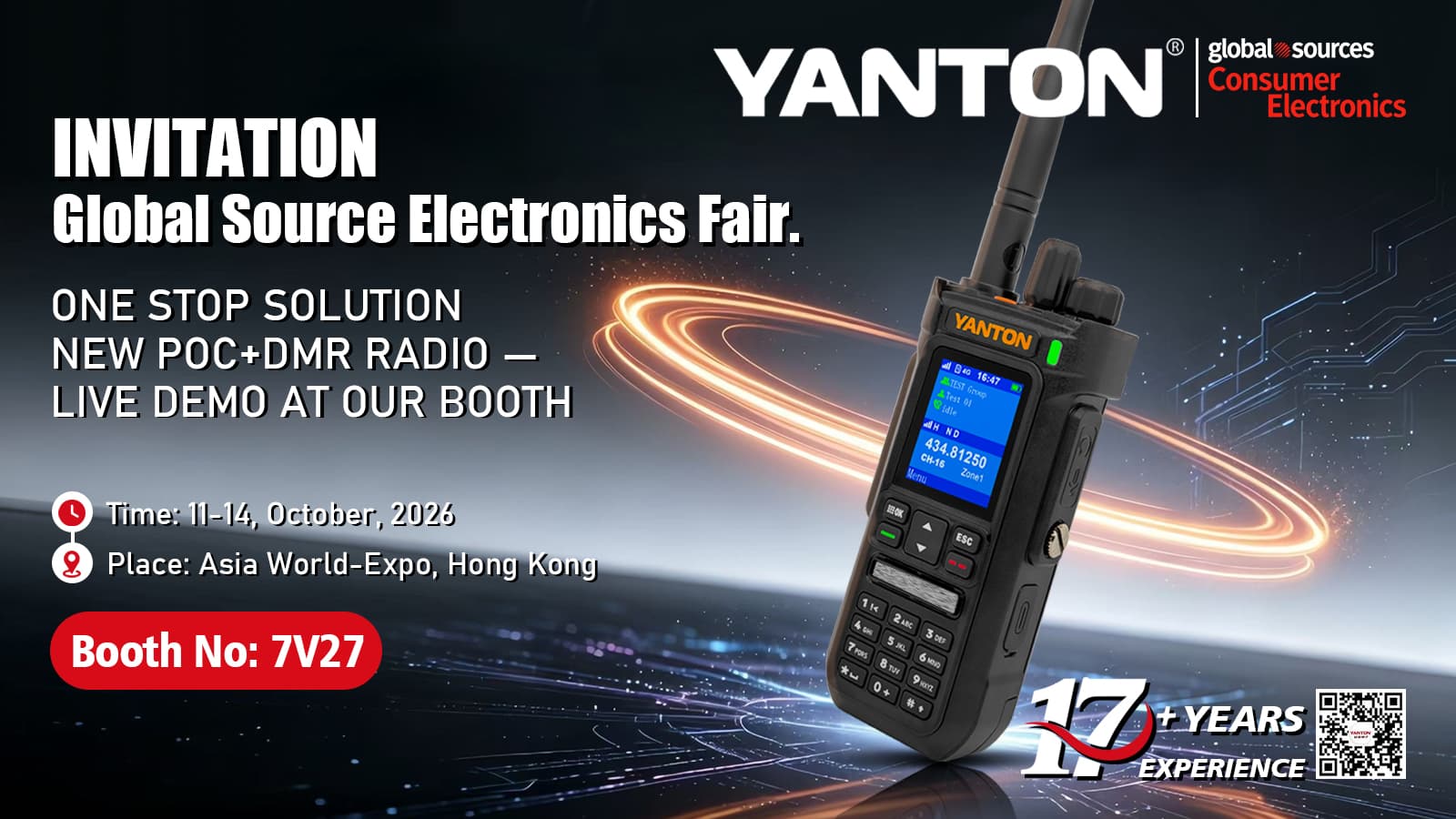
Dear Valued Customers and Industry Partners, We are delighted to announce that YANTON Electronics Co., Ltd. will be exhibiting at the upcoming Global Sources Consumer Electronics Show in Hong Kong. We warmly invite you to visit our booth and discover YANTON's latest innovations and technologies firsthand. Event Details: Date: October 11–14, 2026 Venue: AsiaWorld-Expo, Hong Kong Booth Number: 7V27 As a leading global manufacturer of wireless communication equipment, YANTON is dedicated to delivering high-quality, cost-effective solutions to our customers. At this event, we will showcase our newest range of handheld walkie talkies, mobile radios, and other advanced communication solutions. Our professional team will be available on-site to provide detailed product introductions and live demonstrations, and to address any questions you may have. This is a valuable opportunity to connect with us directly, gain insights into the latest industry trends, and explore potential collaboration opportunities. We look forward to welcoming you at the show and discussing the future of wireless communications together. For more information or to schedule a meeting, please feel free to contact us. YANTON Electronics Co., Ltd. Booth Number: 7V27
TDMA stands for Time Division Multiple Access. It is a digital radio technology that allows multiple users to share the same radio frequency channel by dividing the signal into different time slots. TDMA offers several compelling benefits over older analog systems (like FDMA - Frequency Division Multiple Access): Advantage Dimension Detailed Explanation Higher Spectral Efficiency & System Capacity TDMA allows multiple users to share the same frequency by assigning different time slots. Unlike FDMA (which allocates separate frequency bands per user), this greatly improves frequency utilization and supports more users within the same bandwidth. Simplified Equipment Design & Lower Cost Since transmission and reception occur in different time slots, expensive and bulky duplexers (devices that isolate transmit and receive signals) are not required, reducing both size and manufacturing costs. Lower Power Consumption User devices transmit only during their assigned time slots and remain idle the rest of the time. This results in significantly lower battery consumption and extended standby time for mobile terminals. Smoother Handover (Handoff) Because transmission is discontinuous, mobile devices can use idle time slots to monitor signals from neighboring base stations. This makes handovers smoother, more reliable, and less prone to call drops—enhancing the overall mobility experience. Better Interference Resistance As a digital technology, TDMA inherently offers stronger immunity to interference compared to analog FDMA systems, delivering higher and more consistent communication quality. TDMA's core philosophy is "exchanging time for space." By managing time with extreme precision, it magically "creates" multiple virtual channels out of a single physical frequency. It's the technology that makes modern digital two-way radio systems (like DMR) powerful, efficient, and feature-rich.
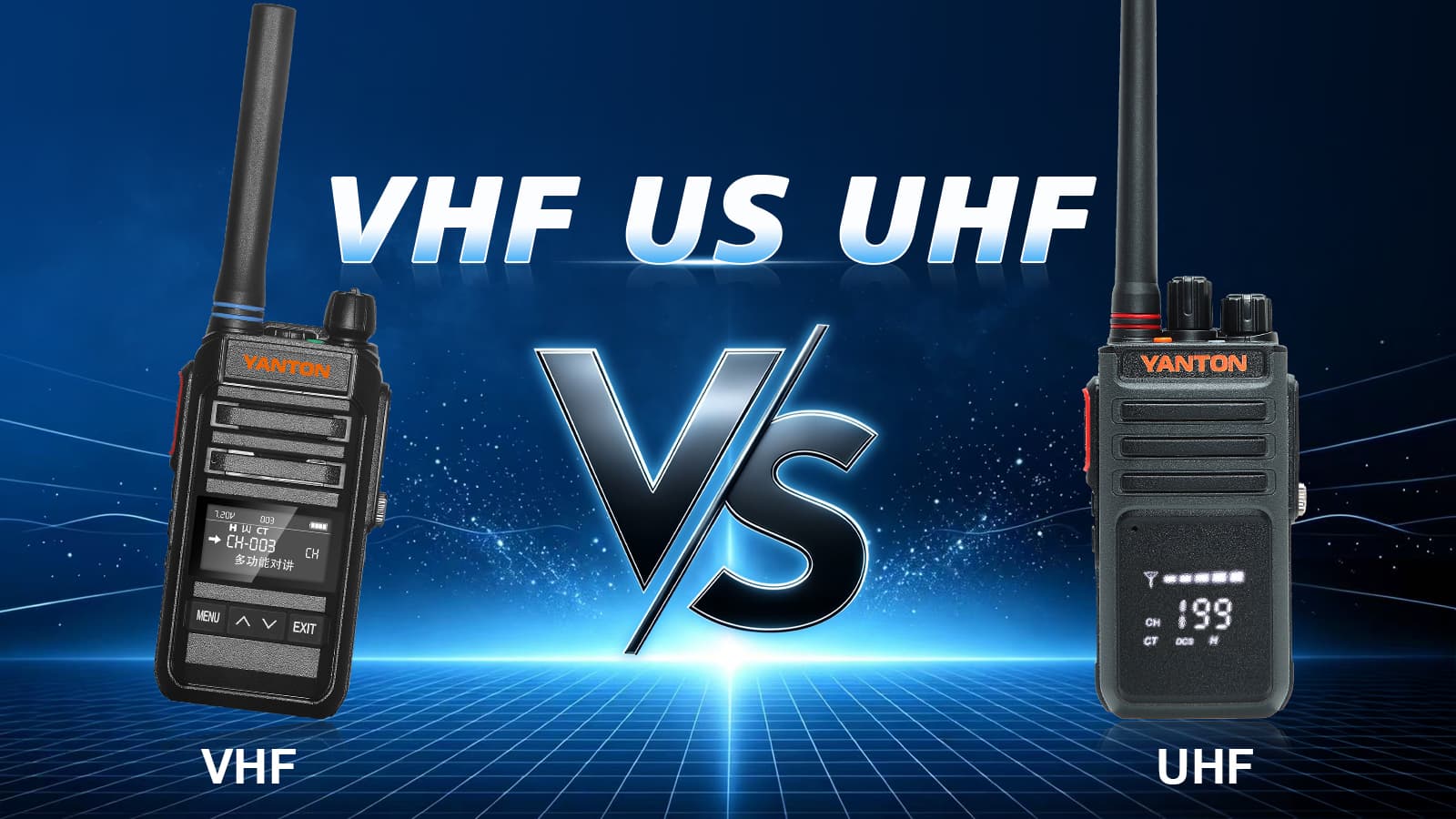
Introduction to Radio Frequency Bands Radio frequencies are divided into different bands, with VHF (Very High Frequency) and UHF (Ultra High Frequency) being two of the most commonly used in radio communication. These frequencies are essential for a wide range of applications, including personal communication, emergency services, aviation, and business use. In simple terms, VHF covers a range of frequencies between 30 MHz and 300 MHz, while UHF spans from 300 MHz to 3 GHz. These bands are used for various types of communication, and understanding their characteristics is key to determining which is best suited for your specific needs. VHF vs UHF: A Side-by-Side Comparison Let’s break down the primary differences between VHF and UHF, focusing on aspects like range, signal strength, penetration, applications, and more. 1. Range and Signal Strength One of the key differences in the VHF and UHF comparison lies in the range of communication each frequency offers. VHF typically offers better long-range communication due to its lower frequency. Since lower frequencies travel further, VHF radio frequencies can cover larger distances. On the other hand, UHF radio frequencies offer shorter communication ranges. UHF signals have a higher frequency and can penetrate through obstacles like walls, buildings, and trees. However, they tend to lose signal strength over longer distances, especially in wide-open areas. 2. Penetration and Interference When it comes to radio communication frequencies, one of the most important factors is how well the signal can travel through various barriers. This makes UHF ideal for environments where signals need to pass through walls or other structures, such as construction sites or urban environments. VHF, on the other hand, is more susceptible to interference from physical obstacles. 3. Applications of VHF and UHF Understanding what VHF and UHF uses for is crucial for selecting the appropriate radio frequency for your needs. Both frequencies serve different purposes, each VHF and UHF application excelling in certain situations. VHF Applications: Marine Communication: VHF is widely used in maritime communication. Since ships often operate in vast open ocean areas, the long-range capabilities of VHF radio frequencies are essential for ship-to-ship and ship-to-shore communication. Aviation: Pilots and air traffic control primarily use VHF for communication, as it provides excellent long-range capabilities and clear communication across the skies. Amateur Radio: Many amateur radio operators favour VHF for long-distance communication, particularly in rural or open-field settings. UHF Applications: Public Safety: Police, fire, and ambulance services often use UHF radio frequencies because they work well in built-up urban areas where communication needs to pass through buildings and other obstacles. Construction Sites: The ability of UHF signals to penetrate obstacles like walls and heavy machinery makes them ideal for use on c...
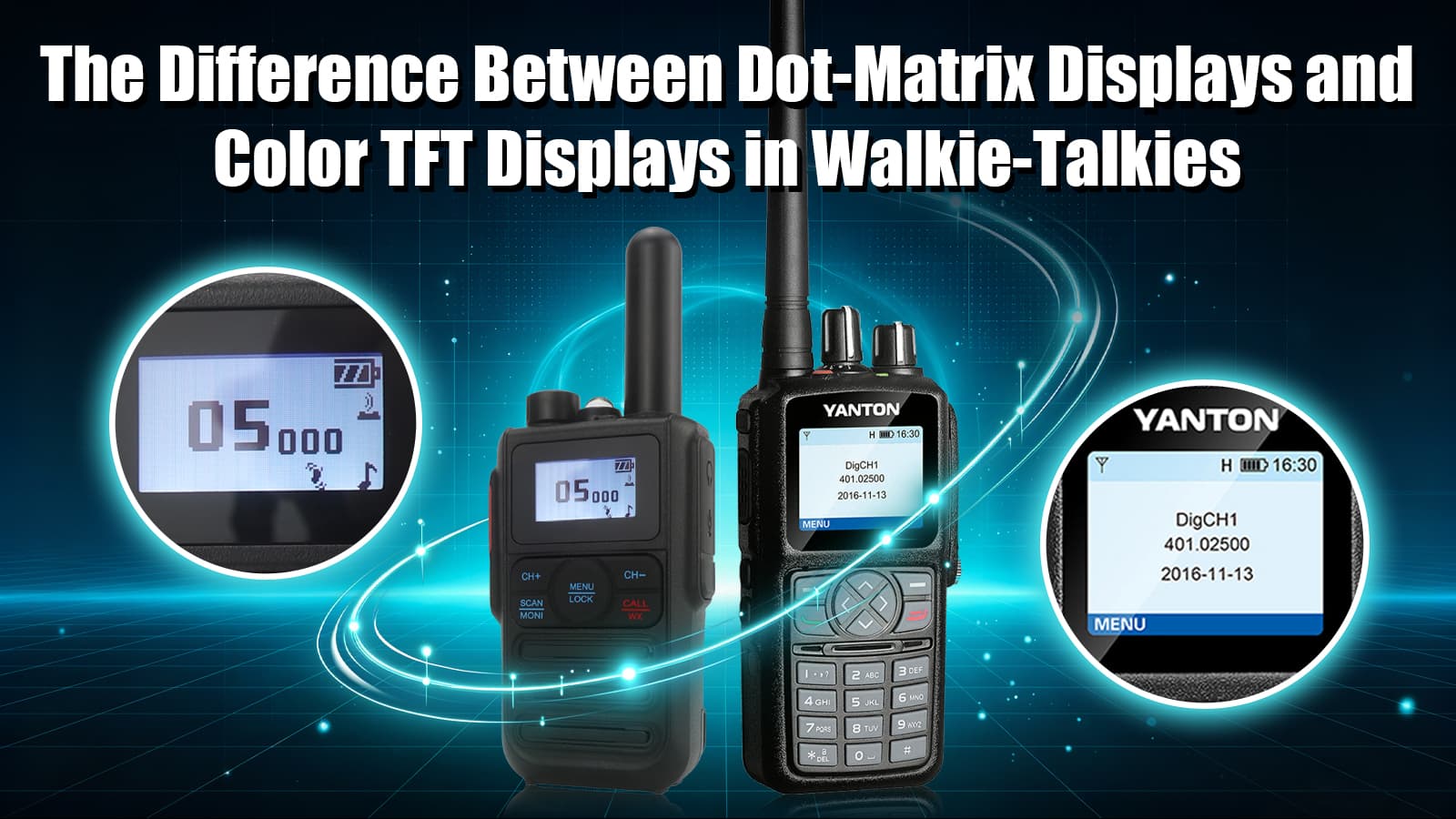
When you pick up a walkie-talkie, one of the first things you notice is the screen. Some models have small, simple displays that show only basic numbers and icons. Others feature bright, colorful screens that look like miniature smartphones. This visual difference represents a fundamental technological divide: Dot-Matrix Displays versus Color TFT Displays. What Is a Dot-Matrix Display? A dot-matrix display consists of a grid of tiny pixels arranged in rows and columns. By turning specific pixels on or off, the screen forms characters, numbers, and simple graphics. Unlike older segment displays (which could only show fixed patterns like the number "8"), dot-matrix screens offer flexibility in what they can display. In walkie talkies, dot-matrix displays are almost always monochrome—meaning they show a single color against a contrasting background. Common combinations include: Black pixels on a green/yellow background Black pixels on a gray/white background White pixels on a blue background (often called "blue screen") These displays are driven by simple controllers and do not require powerful processors to operate. What Is a Color TFT Display? TFT stands for Thin-Film Transistor. It is an advanced type of LCD (Liquid Crystal Display) where each individual pixel is controlled by its own dedicated transistor. This active-matrix design allows for precise control over color and brightness, enabling the screen to display full-color images, smooth animations, and complex graphical user interfaces. Real-World Scenarios Scenario Needs Best Choice Reason Construction Site Foreman Reliable communication, channel monitoring, dust resistance, all-day battery Dot-Matrix Display The screen clearly shows channel and battery status under bright sun, and the radio lasts an entire shift without recharging. Search and Rescue Team Leader GPS coordinates, topographic maps, team member locations, image sharing Color TFT Display Maps and data are essential for coordination, and the transflective panel ensures visibility in all lighting conditions. Hotel Event Coordinator Professional appearance, messaging between staff, indoor use Color TFT Display The vibrant screen impresses clients, indoor lighting eliminates sunlight issues, and messaging features improve operations. Amateur Radio Enthusiast (Hiker) Lightweight, long battery life, simple operation, occasional use Dot-Matrix Display Keeps the radio affordable and reliable for weekend adventures. The difference between dot-matrix displays and color TFT displays in walkie-talkies is not about one being "better" than the other. It is about purpose and environment. Dot-matrix is the reliable partner for harsh conditions, long missions, and tight budgets. It does exactly what you need—display channels, battery levels, and signal strength—without fuss or frequent charging. Color TFT is the command center for complex operations. It brings maps, images, color-coded alerts, and intuitive...
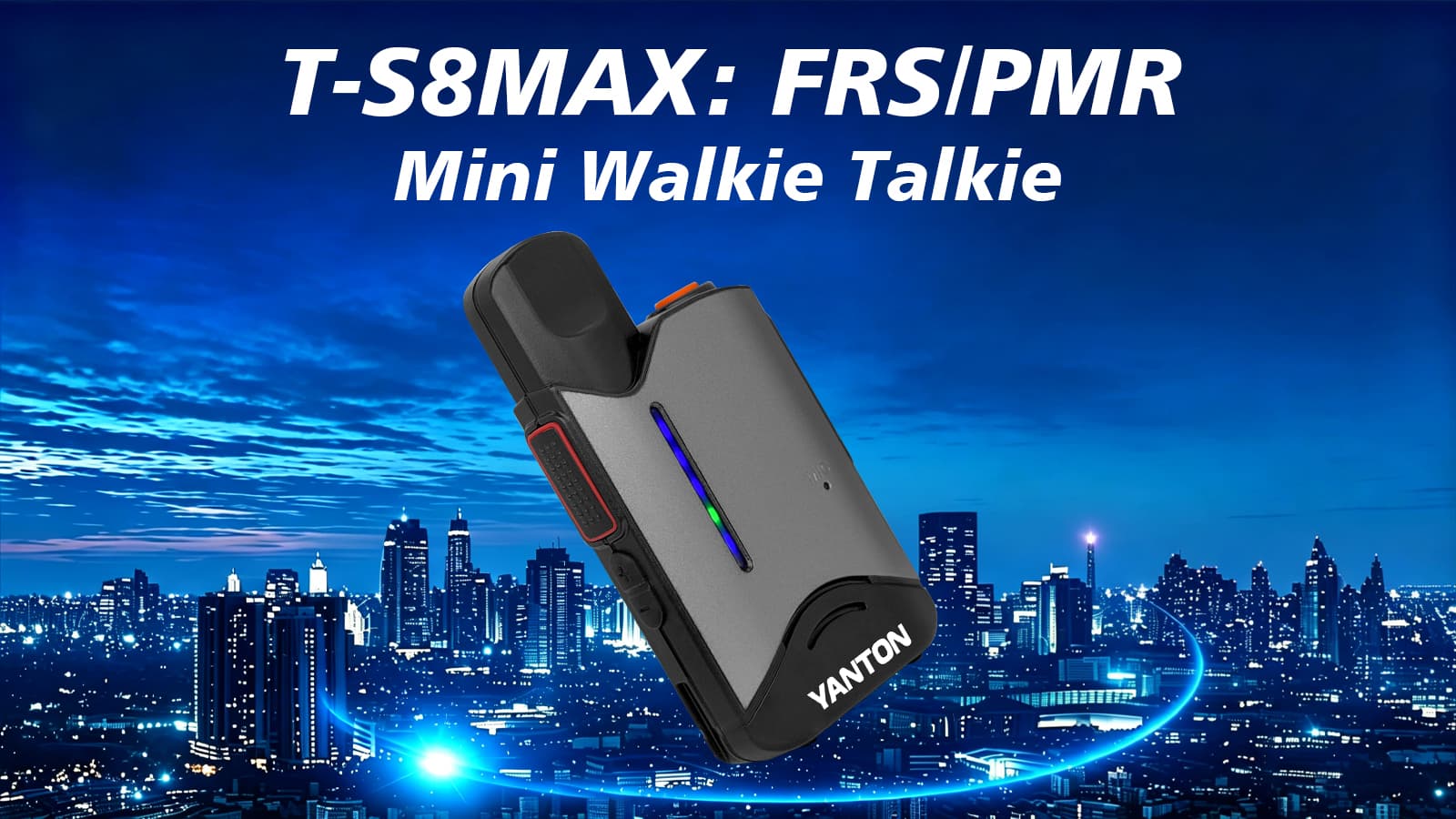
T-S8MAX: Redefining License-Free Communication – FRS/PMR Band, 2W Output, and Professional Audio Technologies YANTON announces the launch of the T-S8MAX, its latest mini portable walkie-talkie purpose-built for retail operations, hospitality services, event coordination, and outdoor recreation. Combining powerful RF performance with advanced audio processing, the T-S8MAX sets a new benchmark for license-free two-way radios. The T-S8MAX delivers a professional-grade feature set that ensures clear, secure, and reliable communication in any environment: 1. License-Free Global Compatibility Supporting both FRS 462MHz and PMR446MHz bands – which are license-exempt in most regions worldwide – the T-S8MAX is ready to use straight out of the box. No cumbersome licensing applications or recurring fees are required, dramatically lowering the barrier to instant team connectivity. 2. 20 Memory Channels for Efficient Workflow Equipped with 20 programmable memory channels, the device allows users to quickly store and recall frequently used frequencies and settings. This feature streamlines multi-team and multi-department coordination, eliminating on-site reconfiguration delays and boosting operational efficiency. 3. 2W High Output Power Delivering a robust 2W of RF output power – significantly higher than typical 0.5W consumer radios – the T-S8MAX ensures extended range and superior signal penetration in challenging environments such as shopping malls, construction sites, and suburban outdoor areas. 4. Professional-Grade Audio Processing Three integrated audio technologies work in synergy to guarantee crystal-clear voice transmission even in noisy surroundings: Scrambler: Encrypts voice signals to prevent eavesdropping by unintended listeners, safeguarding sensitive business communications. Compander: Compresses audio dynamics before transmission and expands them upon reception, effectively reducing background hiss and improving signal-to-noise ratio for fuller, clearer speech. Noise Cancelling (Optional): Filters out steady-state ambient noise (e.g., engine hums, air conditioning units) via hardware or algorithms, ensuring that the receiving party hears only the human voice – even in loud environments. 5. Lightweight, Ergonomic, and Convenient True to its "mini" designation, the T-S8MAX is remarkably compact and lightweight, complete with a belt clip for hands-free carrying on belts or collars. It also features a Type-C fast-charging port, compatible with modern chargers and power banks, significantly extending operational convenience and reducing downtime.
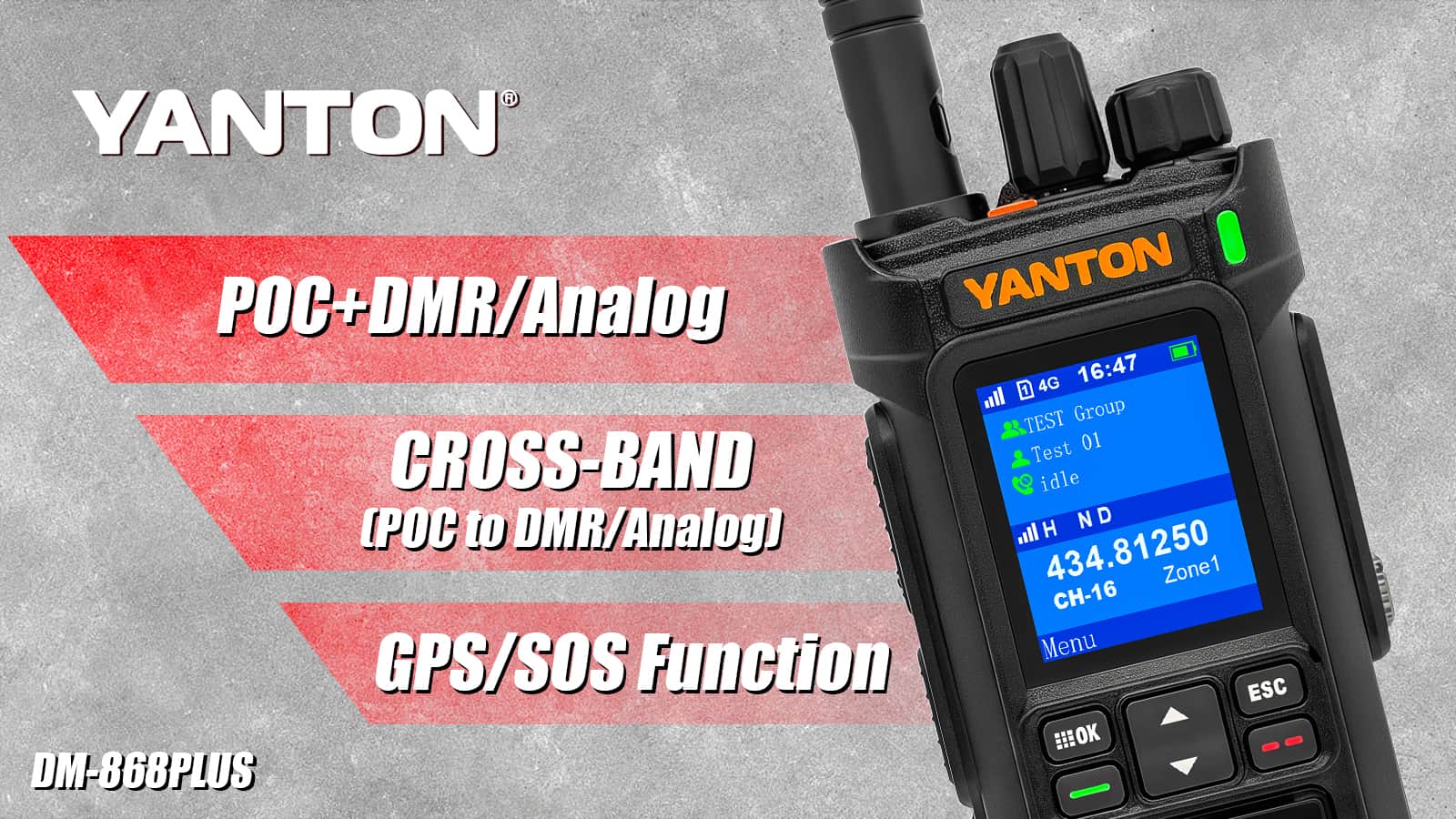
The YANTON DM-868PLUS Smart PoC Radio seamlessly integrates DMR digital/analog modes, voice, and data into one powerful device. By combining PoC broadband with conventional two-way radio, it enables limitless voice calls, one-touch recording, and more. Ideal for public safety, power inspection, transportation, and VIP security. Highlights of DM-868PLUS CROSS BAND The CROSS BAND function features an intelligent interoperability gateway for seamless transition between PoC (4G/5G) and DMR/Analog systems. Communications are automatically routed via the optimal network or manually overridden through the priority selection protocol, ensuring barrier-free connectivity across wide-area and localized dead zones. With auto-scan and fallback switching, it guaranteeing uninterrupted dispatch regardless of network fluctuations. Superior Audio Quality The DM-868PLUS delivers crystal-clear audio with 1W power output. Filters out ambient sounds for clear communication even on the move. Experience reliable communication that enhances productivity and safety in every situation. Power for Longer Shifts No matter where your job takes you, you can rely on the DM-868PLUS to meet your power needs. Equipped with a 2,000 mAh battery, it provides 24 hours of work time (5-5-90). GPS Tracking The device features an integrated high-sensitivity GPS/BeiDou module for instant location acquisition. Positioning data is saved locally or transmitted via the accompanying platform to the YANTON (Digital Evidence Management Platform) for real-time visual monitoring. With AGPS assisted start and multi-satellite constellation support, it ensuring fast and accurate positioning even in urban canyons or dense foliage.
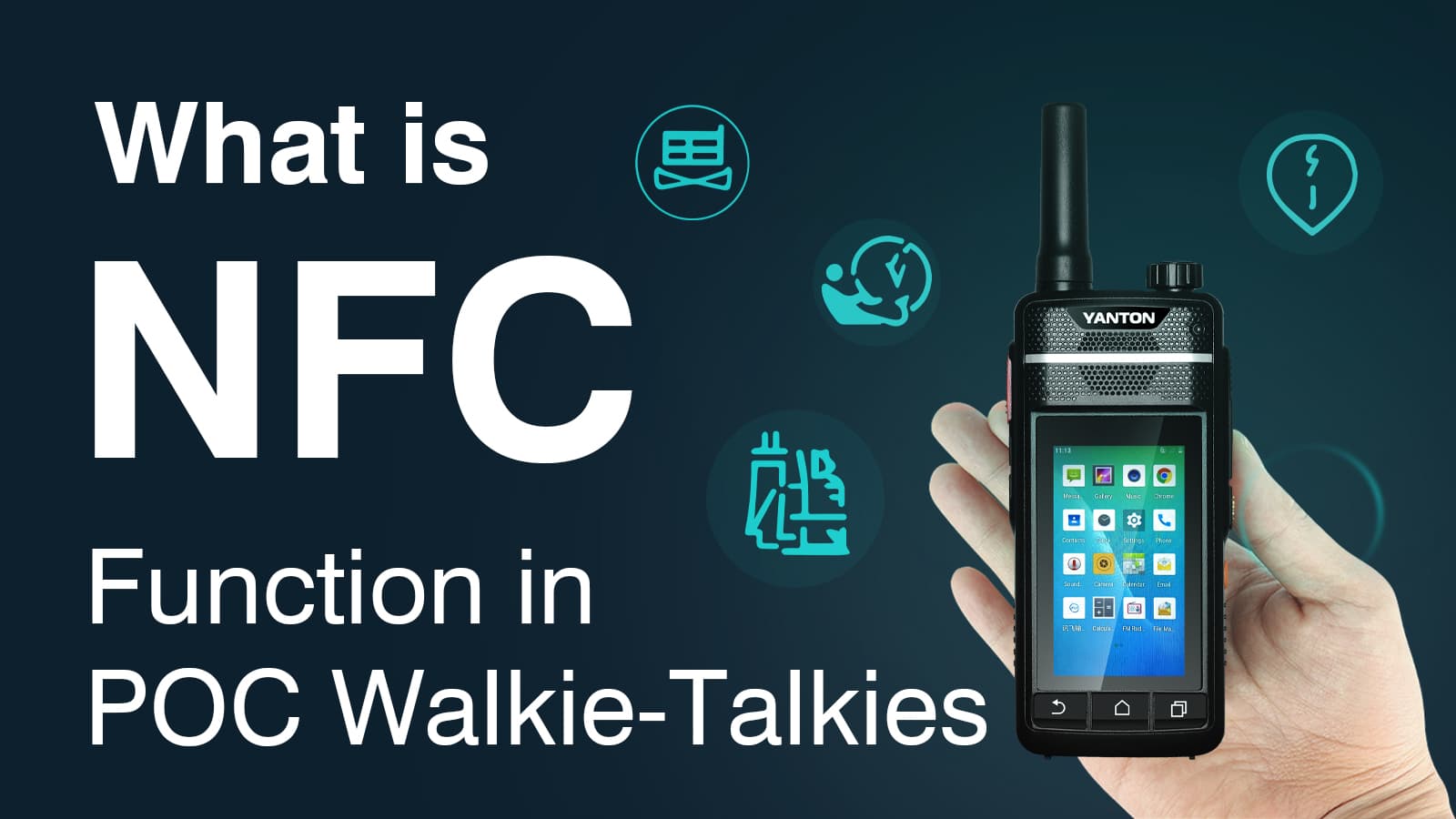
In POC walkie-talkie (which operate over cellular networks like 4G/5G), the NFC (Near Field Communication) function serves as a versatile, real-time smart tool for professional and industrial scenarios. Unlike traditional two-way radios, POC devices run on smart operating systems and have constant network connectivity, making NFC much more powerful than just a simple "check-in" tool. Key Applications 1. Smart Patrol & Guard Tour Check-in This is the most common use. Security guards or inspection staff simply tap their POC walkie-talkie against an NFC tag installed at a designated checkpoint. The device instantly records: l Who checked in l Where (the exact checkpoint) l When (timestamp) Thanks to the POC device's real-time network connection, this data is uploaded to the cloud immediately. Managers can monitor patrol progress live on their computers or phones, ensuring no checkpoints are missed or delayed. 2. Access Control & Identity Verification POC walkie-talkie with NFC can function as digital employee badges. Workers can tap their device against an NFC-enabled door lock to gain entry to restricted areas. This eliminates the need for separate physical cards and allows administrators to remotely grant or revoke access permissions instantly. 3. Fast & Secure Bluetooth Pairing NFC enables one-touch Bluetooth pairing. Instead of going through complex menu settings, users simply tap two NFC-enabled POC devices together to instantly pair them for wireless audio accessories (like earbuds or headsets). This is especially useful in noisy or fast-paced work environments. 4. Quick Configuration & Data Sharing (Cloning) In large-scale deployments, NFC allows rapid frequency/channel cloning. A supervisor can configure one device with all the necessary settings, then simply tap it against other POC devices to instantly copy the configurations. This saves significant time compared to manual programming or using a computer cable. 5. Mobile Payment & Smart Logistics Some advanced POC walkie-talkies support NFC payments (like transit cards or vending machine purchases) and asset tracking—workers can tap the device on inventory items to scan and update stock information in real time. Why It Matters in POC Devices Aspect Traditional Walkie-Talkies POC Walkie-Talkies with NFC Data Upload Offline, requires manual sync Real-time cloud upload Management Post-shift reports only Live monitoring & alerts Flexibility Fixed functions Can be updated with new apps/features Integration Standalone Integrates with enterprise systems (ERP, HR, etc.)
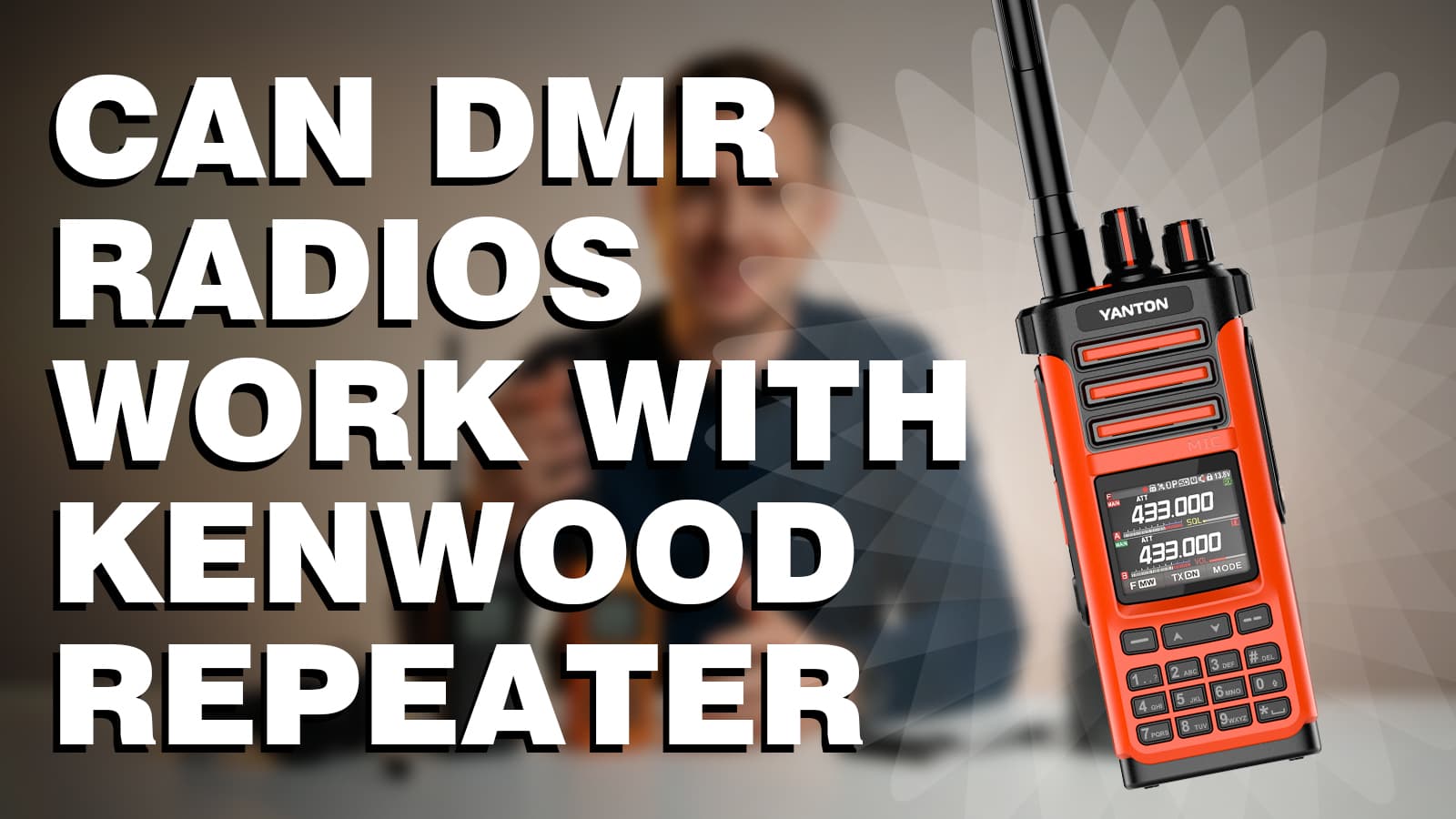
A DMR radio can generally work with a Kenwood DMR repeater, but there are important details to be aware of. Because DMR (Digital Mobile Radio) is built on an open, global standard (ETSI), interoperability between different brands is one of its main features. This means that for core functions like Group Calls, Private Calls, and All Calls, a Motorola, Hytera, or other brand DMR radio can successfully communicate through a Kenwood DMR repeater. �� Interoperability: What Works and What Doesn't Kenwood itself has tested and documented the compatibility of its DMR repeaters with competitor radios like Motorola's MOTOTRBO DP4801e. The table below, based on that testing, shows what functions are interoperable and which have limitations. Function Interoperable? Key Notes Group Call, Private Call, All-Call: Yes, These basic but crucial functions work as expected. Emergency, Call Alert, Radio Stun/Revive: Yes, These features are supported. Short Data Messages (SDM): Yes, Must use the DMR standard setting. Basic Voice & PTT: Yes, Core voice communication is supported. Broadcast Call, Unaddressed Call: No, These functions are not compatible between Kenwood and some competitors. Call Interruption: No, This feature is not interoperable. Kenwood advises disabling it to communicate with Motorola radios. GPS Data: No, Location data is typically not shared across brands in this configuration. ⚠️ Key Considerations for Setup For a Motorola radio to work best with a Kenwood repeater, the programming often requires some adjustments. For example, features like "Call Interruption" on the Kenwood side may need to be disabled, and the Motorola radio might need its "Privacy Type" set to "Enhanced" to properly handle encryption. The main limitation arises when you try to use advanced, brand-specific features for system management. For instance, while a repeater will simply pass along the DMR data stream from any radio, the proprietary methods used by different manufacturers for IP networking or multi-site linking are often incompatible. This means you can't mix a Motorola and a Kenwood repeater in the same IP-linked network; they need to be managed as separate systems or through a third-party solution. �� In Summary Core functionality (Voice, Group Calls, Emergency): ✅ Yes, it will work Advanced/Brand-Specific Features: ⚠️ May not work, and often requires careful programming. Before deploying a mixed-brand system, it's highly recommended to work with a professional radio dealer. They can ensure that the radios and repeaters are correctly programmed with compatible settings, avoiding unexpected issues.
Please read on, stay posted, subscribe, and we welcome you to tell us what you think.
 YANTON Building,Creation Road Tuoxing Industrial,Optoelectronics-information industry base,xiamei town,Nan'an City ,Fujian Province, China. / Room 2105 XM1507 Trend Center 29-31 Cheung , Lee Street Chai Wan,Hongkong
 86-592-5798082
86-595-86767398
86-592-5798082
86-595-86767398
 86-595-86761298


© Copyright: 2026 QUANZHOU YANTON ELECTRONICS CO., LTD. All Rights Reserved.

IPv6 network supported