English
 русский
 español
 português
 العربية
 China
China



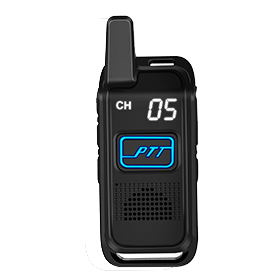
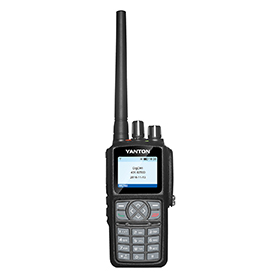


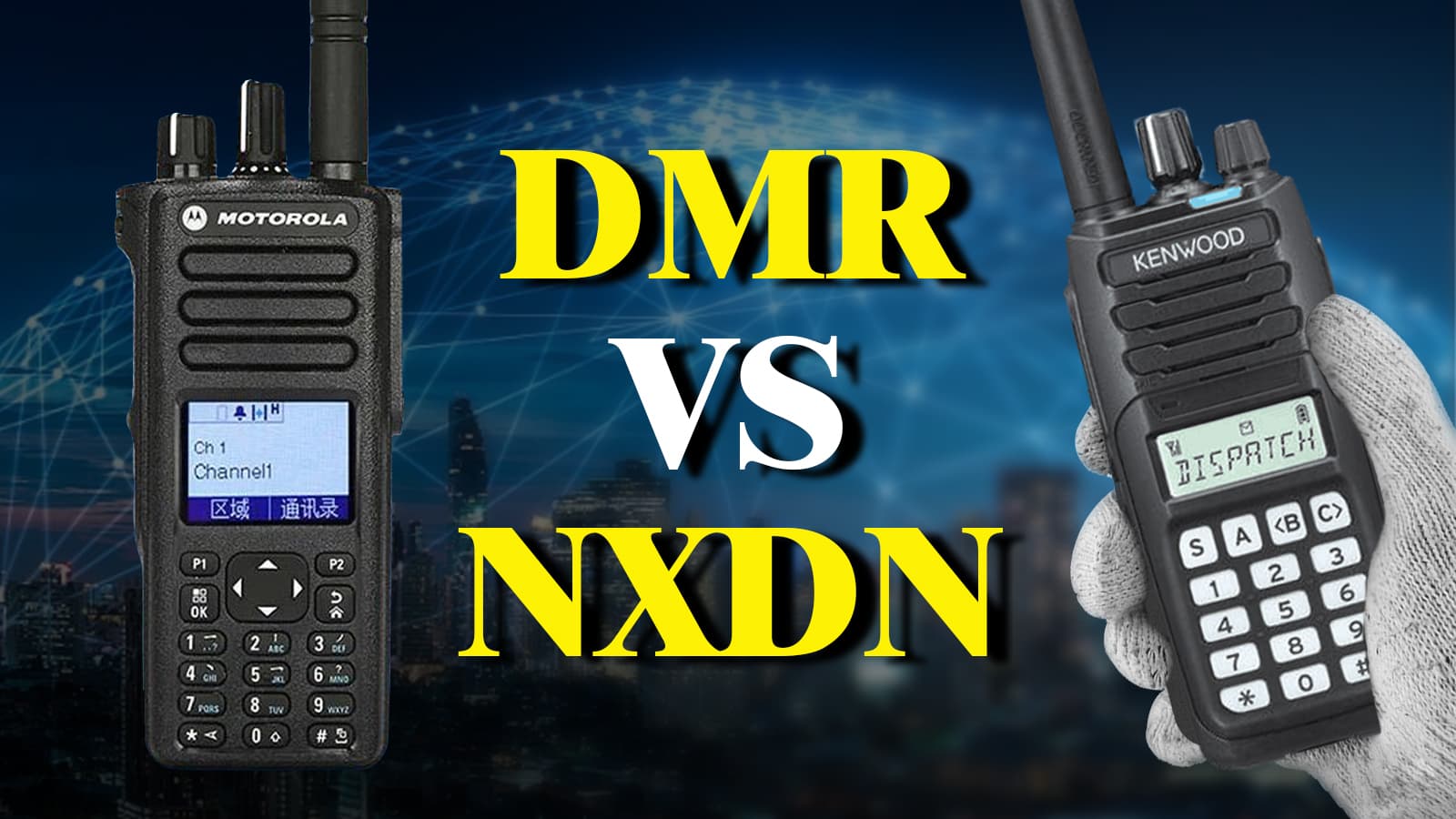
Motorola and Kenwood represent two distinct technological approaches in the digital two-way radio space: Motorola champions the DMR protocol (based on TDMA technology) via its MOTOTRBO series. Kenwood champions the NXDN protocol (based on FDMA technology) via its NEXEDGE series. The most fundamental difference lies in the multiple-access method, which directly impacts system capacity, communication range, and equipment costs. Side-by-Side Comparison Aspect Motorola (MOTOTRBO – DMR) Kenwood (NEXEDGE – NXDN) Core Technology TDMA (Time Division Multiple Access) FDMA (Frequency Division Multiple Access) Channel Bandwidth 12.5 kHz (split into 2 time slots) 6.25 kHz (ultra-narrowband) Spectral Efficiency With repeaters, one physical channel supports 2 simultaneous talk groups, effectively doubling capacity. In direct (simplex) mode, it functions as a single channel. One physical channel supports one talk group. Achieves 6.25 kHz spectral efficiency even without repeaters. Communication Range Standard range (theoretically slightly less than FDMA in the same frequency band). Better receiver sensitivity due to narrowband filtering. Theoretically ~20% greater range than analog systems. System Cost Lower repeater cost: one repeater can serve two channels, reducing hardware investment. However, a single repeater failure affects both channels. Higher repeater cost: one repeater supports only one voice channel; multi-site systems require more equipment. However, a single repeater failure affects only one channel, offering better fault tolerance. Voice & Data Cannot transmit voice and data simultaneously within the same time slot. Can transmit voice and data (e.g., GPS) simultaneously within the 6.25 kHz channel. Vocoder AMBE+2 (standard across DMR protocols) AMBE+2 (same as DMR) Protocol Standard Adheres to the open ETSI DMR standard, with many manufacturers supporting it. Primarily a Kenwood and ICOM initiative under the NXDN standard. Compatibility & Upgrades Some high-end Kenwood models can purchase optional licenses to support DMR protocol on the same hardware. Kenwood's high-end NX 3000 series natively supports NXDN and can be upgraded to support DMR. Important Notes Both product lines support analog mode and can interoperate with older analog equipment. However, digital-mode protocols are completely incompatible—they cannot communicate directly with each other in digital mode. Kenwood offers distinct product families: NXDN series (e.g., NX‑1300NC) DMR series (e.g., NX‑1200DC3) Make sure to specify the protocol when purchasing. Motorola's MOTOTRBO series is exclusively DMR-based.
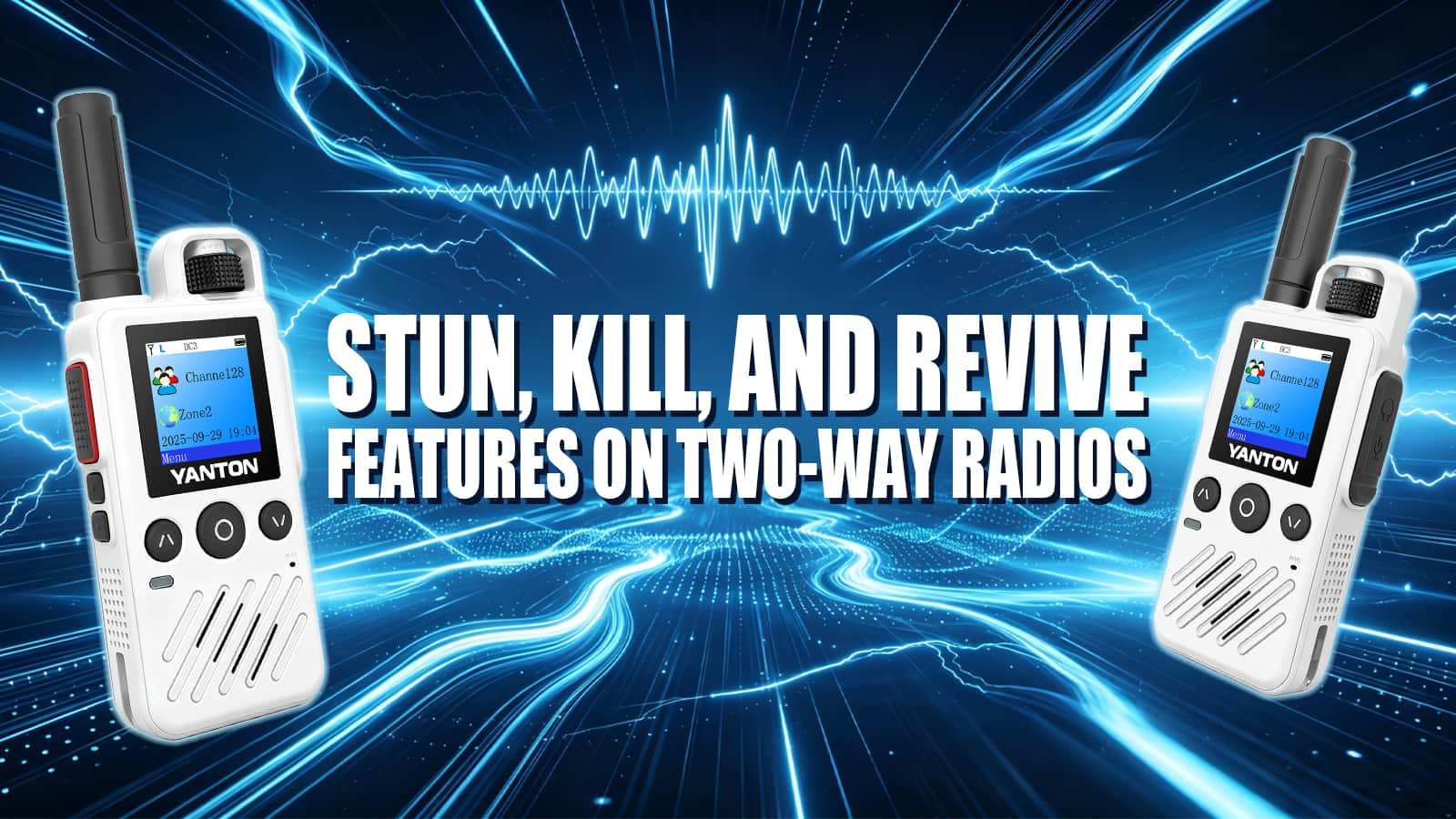
Industries that demand rapid and dependable communication rely heavily on two-way radios for operations in law enforcement, construction sites, security measures, and event coordination. The possibility of loss or theft of these radios remains a persistent risk along with unauthorized access if they fall into the wrong hands. Modern two-way radios are now designed with specialized remote management functionalities named Stun, Kill, and Revive to address security concerns. This functionality delivers a strong protection system against unauthorized radio use while enhancing security measures when the device becomes compromised. 1. Stun Function: Temporarily Disabling a Lost Radio The Stun function serves to remotely disable radios that have been misplaced or temporarily lost. An authorized radio transmitter or central control sends a stun signal to disable the lost radio remotely. The device becomes unable to send or receive transmissions which makes it completely useless to anyone who discovers or steals it. Once a radio is stunned: It cannot transmit any outgoing messages. It cannot receive any incoming messages. The radio stops functioning on every available channel and frequency spectrum. This feature provides maximum protection for sensitive information while blocking unauthorized individuals from eavesdropping or disrupting communication channels. 2. Revive Function: Re-enabling a Disabled Radio With the Revive function you can reactivate a stunned radio after locating or retrieving it. An authorized device can restore full radio functionality by transmitting a revive signal which enables it to send and receive messages. The revive function proves essential when a lost radio is found since it enables users to restore full functionality of the device without needing to reprogram it manually. 3. Kill Function: Permanently Disabling a Compromised Radio The kill function proves more drastic than the stun feature because it serves as the standard response when a two-way radio has gone missing for good or been stolen. Sending a kill signal to the compromised radio disables all its functions which results in permanent inoperability. The kill function makes the compromised radio unusable to unauthorized persons unless a professional restores its functions. Once a radio has been "killed": The radio remains permanently unable to function and remote reactivation options are not available. Restoring the radio to working condition requires either hardware reprogramming or servicing. In high-security settings the feature becomes essential because sensitive information faces danger if the radio ends up with unauthorized users. Use Cases and Benefits of Stun/Kill/Revive Features Organizations that depend on two-way radios for essential communications benefit greatly from Stun/Kill/Revive features. Enhanced Security: The features block unauthorized access to private communications which safeguards sensitive information and minimizes security breaches. Cost Sa...
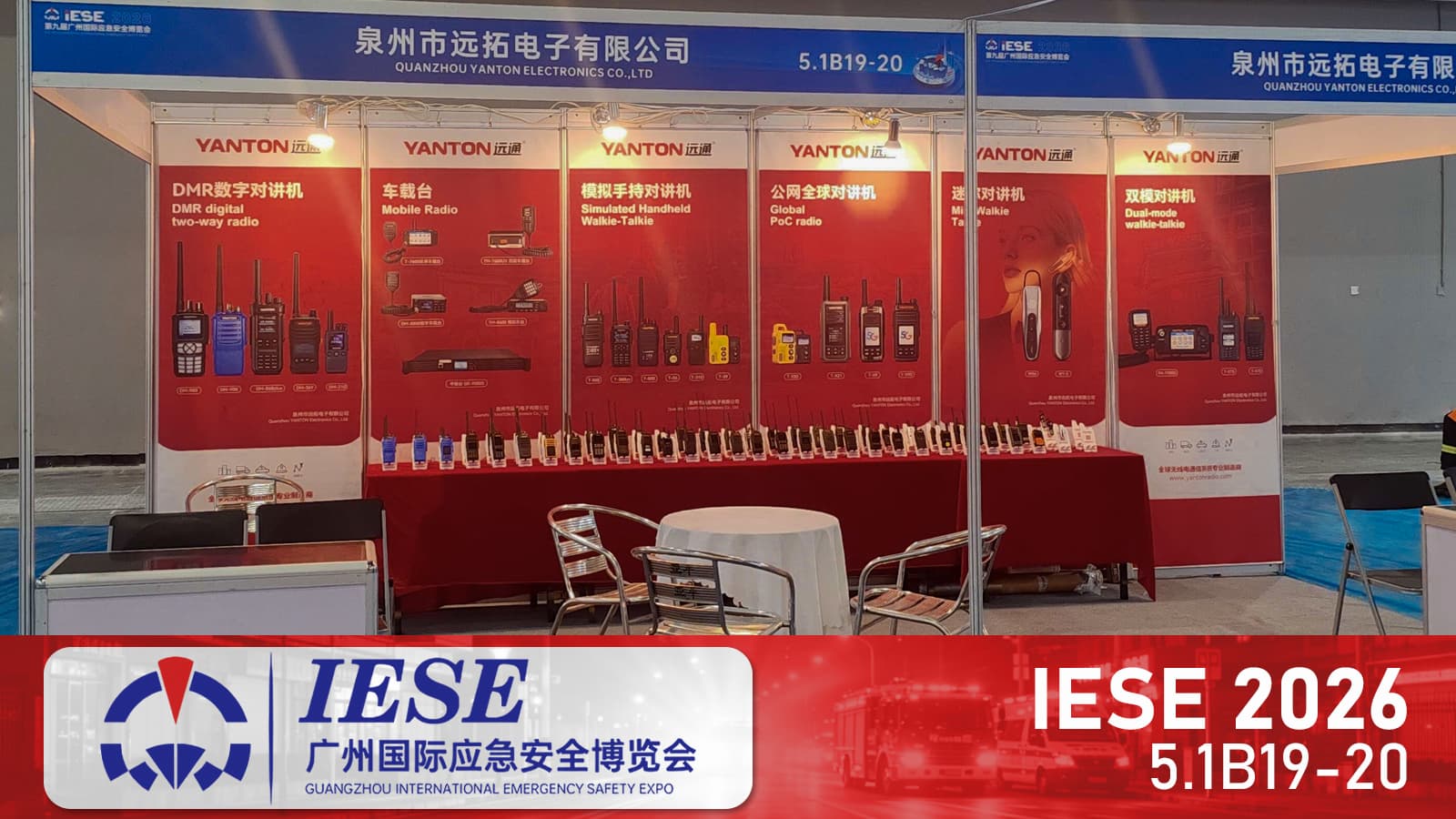
As emergency scenarios become increasingly complex, the demand for resilient, rapid-deployment communication has never been higher. YANTON’s participation underscores its commitment to the "Action Plan for the Development of Security and Emergency Equipment (2023-2025)" and its mission to protect lives through technological innovation. Unveiling the 2026 Emergency Portfolio At this year’s expo, YANTON was demonstrate its comprehensive "Convergence" strategy, highlighting how different technologies work together to ensure zero-gap coverage: Temporary LTE PoC Solutions: Our newest highlight—designed for rapid network establishment in "no-infrastructure" zones, providing instant cellular-grade Push-to-Talk (PoC) capabilities. DMR & PoC Convergence: Bridging the gap between traditional digital radio and modern public network terminals for seamless cross-platform dispatching. Integrated Disaster Recovery Kits: Ruggedized, portable "comms-in-a-box" solutions for immediate frontline response. A Message from Leadership ‘Participating in the Guangzhou Emergency Expo for the second year is a testament to our deep roots in this sector," said a YANTON spokesperson. "We don't just provide hardware; we provide the certainty that rescuers can communicate and that communities stay protected. We look forward to sharing our latest LTE and Mesh advancements with the industry leaders gathered at Pazhou’.
May 2026 – YANTON is proud to be a member of Sedex (Supplier Ethical Data Exchange), the global platform for ethical supply chain management. As a member of Sedex, we demonstrate our commitment to transparency and responsibility in our business operations, and our dedication to promoting responsible practices in our global operations and supply chains. Sedex Membership Sedex is a non-profit organization that provides a platform for companies to manage their ethical and sustainability performance in their supply chains. Through its membership, YANTON can access resources and tools from a centralised platform that support responsible business practices, such as self-assessment questionnaires and training materials. By doing so, we can share information about our ethical and sustainability practices, such as our policies and processes, with our global customers and stakeholders. Members can also use the platform to collaborate with other companies and organizations, sharing best practices and improving its sustainability performance over time. Sedex also helps YANTON to manage and monitor our global supply chain risks, such as ensuring that our suppliers meet ethical standards, and responding quickly to any incidents that may arise. This helps us minimize the risk of negative impacts on its reputation, and to ensure that its products are manufactured in a responsible and sustainable manner. Sedex Tools A detailed explanation of some of these tools include: Self-Assessment Questionnaires (SAQs): Sedex offers a range of SAQs that cover different aspects of ethical and sustainability performance, such as labor rights, health and safety, and the environment. Companies can use these SAQs to assess their own performance and identify areas for improvement. Data Management Platform: Sedex provides a secure and centralized platform for companies to store and share information about their ethical and sustainability performance with their customers and stakeholders. Supply Chain Mapping: Companies can use the Sedex platform to map their supply chain, identify and assess suppliers, and track their performance over time. Training and Support: Sedex provides a range of training and support resources to help companies implement responsible business practices and improve their ethical and sustainability performance. Collaboration and Networking: Companies can use Sedex to collaborate with other organizations, share best practices, and build relationships with suppliers and customers to improve their sustainability performance. YANTON YANTON's membership in Sedex underscores our dedication to corporate social responsibility, ethical supply chain management, and sustainable business operations, reinforcing our standing in the two-way radio industry.
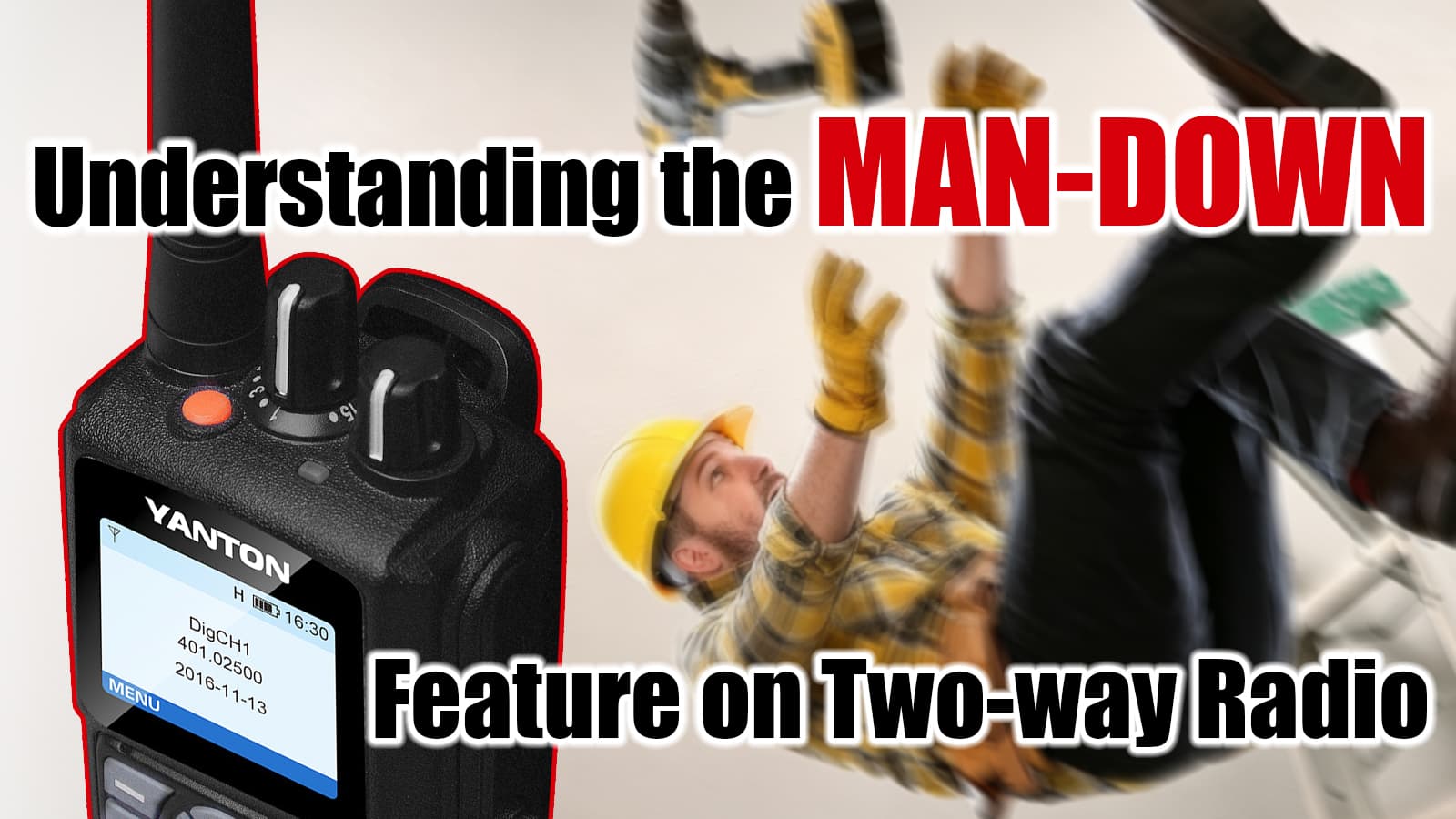
Man Down is an automated safety feature in two-way radios designed to detect if a user becomes incapacitated (e.g., from a fall, injury, or sudden illness) and cannot call for help manually. If the radio detects a problem, it automatically sends an alert to a supervisor or dispatcher . Here is how the feature typically works and what to consider when implementing it. How Man Down Works The feature relies on built-in motion sensors, usually an accelerometer, to constantly monitor the radio's position and movement . It triggers an alarm based on two main conditions: Tilt (Angle): The radio is no longer upright, suggesting the user has fallen. Inactivity (Motionless): The radio has not detected any movement for a pre-set period, suggesting the user is unconscious or immobile . To prevent false alarms, the system uses a two-stage timer and warning system, giving the user a chance to cancel the alert if they are okay. Pre-Alert Timer: The sensor detects a "Man Down" condition (e.g., the radio is horizontal). If this condition lasts for a programmed time (e.g., 7 seconds), the radio enters a pre-warning state, beeping or vibrating to tell the user an alarm will be sent . Post-Alert Timer (User Grace Period): If the user does not correct the situation (by standing up or pressing a button) within this grace period (e.g., another 10-15 seconds), the radio triggers the full emergency alarm . Emergency Transmitted: An alarm is sent to the dispatcher or supervisor. If enabled, the radio can also enter "hot-mic" (open mic) mode, allowing the dispatcher to listen to what is happening around the user without them pressing any buttons . Key Features and Considerations Feature Benefit & Best Practice Minimizing False Alarms: To avoid unnecessary panic, motion and tilt timers are programmable. It's critical to match these settings to your specific work environment—for example, a 10-second timer for high-risk work vs. a 60-second timer for a worker who sits at a desk . GPS Integration: When combined with GPS, the alert includes the user's exact location, allowing help to find them immediately without having to search a large worksite . User Training Users must know how to cancel a false alarm (e.g., by pressing a "Clear" button or simply shaking the radio). They should also know how to enable the feature, as it can sometimes be turned off manually to prevent alerts during breaks or seated work . Equipment Compatibility: Man Down is generally an optional feature on mid-to-high tier digital radios (like the YANTON DM-980) or is standard on ATEX radios for hazardous environments. It usually requires a specific software license or hardware board to activate.
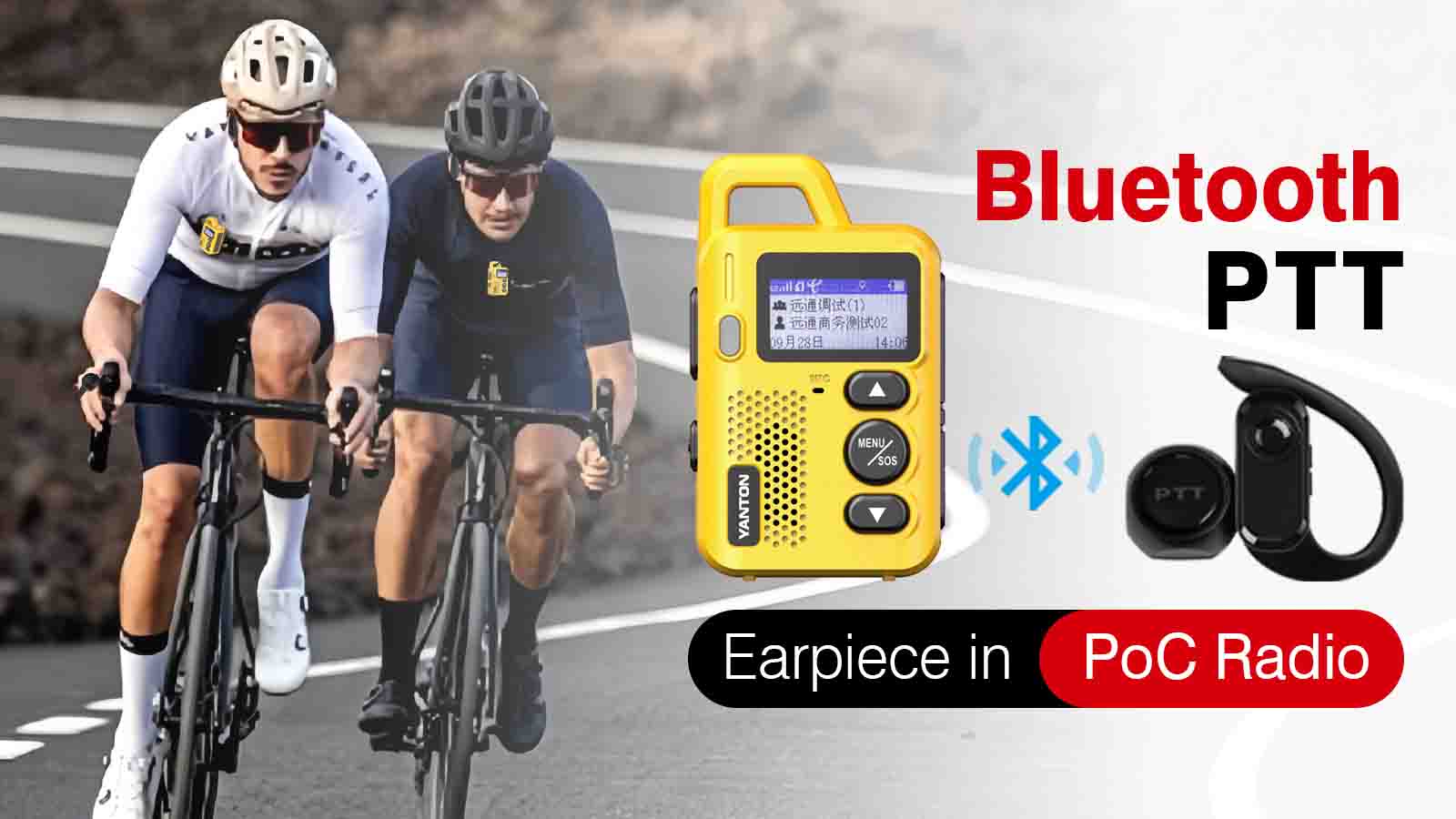
A Bluetooth PTT earpiece brings the familiar "walkie-talkie" experience to a PoC (Push-to-Talk over Cellular) radio that runs on your smartphone. How They Work and Why It Matters There are two main types, and understanding the difference is crucial: Integrated Earpiece (All-in-One): The PTT button, microphone, and speaker are all on the earpiece itself. To talk, you just press the button on your ear. It's the ultimate discreet solution for security, events, or hospitality . Remote PTT with Earpiece (Lapel Mic): This is a two-part system. A small microphone with a large, easy-to-find PTT button clips to your lapel, and a discreet earpiece plugs into it . This is the more rugged and durable choice for construction, logistics, and public safety, as the PTT is easier to locate by touch while wearing gloves. Most importantly, many "Remote PTT" systems feature Dual Link technology, allowing the device to connect to both a PoC app on your phone and a traditional two-way radio simultaneously, handling communication for both systems at once. Key Features to Compare To find the right model, check these critical specs against your needs: Feature Why It Matters Battery Life A standard device lasts 8–12 hours of talk time. For a full shift without charging, look for models on the higher end of that range . Audio Quality Prioritize models with noise-canceling microphones. This is essential for clear communication in loud environments like factories or streets . Durability For fieldwork, look for earpieces with IP (Ingress Protection) ratings against dust and water, and rugged construction. Pro Tip: Connection & Usage While most earpieces pair like standard Bluetooth headphones, there are some specific quirks to keep in mind: The PTT Logic: With a Bluetooth earpiece, the PTT button on the earpiece or lapel mic must be programmed to trigger your phone's Volume Up button. Most PoC apps use this as the default shortcut for hands-free transmission . Radio Limitations: Be aware that most PoC radios can only be connected to one Bluetooth headset at a time. You won't be able to share a single radio with multiple wireless earpieces simultaneously .

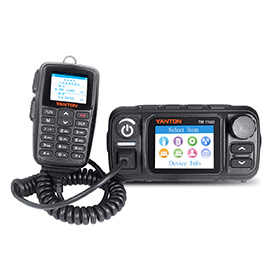
Dual Standby, Dual Receive Receive Two Channels at the Same Time The TM-7500 uses unique Dual Receive feature. It’s just like having two radios in one. This allows you to receive and listen to two different channels simultaneously. So if you’re talking to your mates on channel 64 and you are monitoring the highway channel on 40 you will be able to receive both transmissions at the same time, so you don’t miss an important conversation. Step up your communication game with the TM-7500 UHF CB radios. Engineered for reliability, performance, and durability, these radios are the ultimate choice for those who demand the best in off-road, outdoor, and touring communication. Whether you're navigating rugged terrains, working in remote locations, or ensuring safety on long-haul trips, the 7500 radio delivers clear, consistent, and long-range communication when you need it most. Why Choose the YANTON TM-7500 Radio? Superior Quality & Performance: Designed for exceptional clarity, the 7500 radios provide reliable communication in the toughest environments. Rugged & Durable: Built to withstand extreme conditions, these radios are tough enough for off-roading, outdoor adventures, and demanding work environments. User-Friendly: Easy-to-navigate controls and intuitive design make the 7500 accessible for both beginners and experienced users. Whether you're a weekend adventurer or a professional looking for reliable communication, the YANTON TM-7500 of UHF CB radios are your go-to choice.

From April 11 to 14, 2026, YANTON will be attending the Global Sources Electronics Show in Hong Kong. As an integrated supplier of PoC, DMR, and Analog two-way radios, we deliver more than just devices. From public safety to logistics, hospitality to construction, we deliver reliable, scalable, and future-ready solutions that keep industries moving, connected, and safe—anytime, anywhere. Whether you need to connect remote teams, integrate with existing systems, or bridge PoC with DMR or analog, we ensure that every message gets through. Booth: 9E15 Dates: April 11–14, 2026 Place: AsiaWorld-Expo, Hong Kong, China We look forward to meeting you there!
Please read on, stay posted, subscribe, and we welcome you to tell us what you think.
 YANTON Building,Creation Road Tuoxing Industrial,Optoelectronics-information industry base,xiamei town,Nan'an City ,Fujian Province, China. / Room 2105 XM1507 Trend Center 29-31 Cheung , Lee Street Chai Wan,Hongkong
 86-592-5798082
86-595-86767398
86-592-5798082
86-595-86767398
 86-595-86761298


© Copyright: 2026 QUANZHOU YANTON ELECTRONICS CO., LTD. All Rights Reserved.

IPv6 network supported