What is DMR two-slot TDMA, and what is it used for?
- DMR divides each 12.5 kHz frequency channel into two alternating time slots of 30 ms each. Each slot can carry a separate voice or data call, effectively providing two communication channels on one frequency license. This doubles capacity without requiring additional spectrum. The TDMA structure also contributes to battery efficiency, since a radio transmits only during its assigned slot rather than continuously. In repeater systems, the repeater manages both slots, enabling two groups to communicate simultaneously through the same infrastructure.
How does a repeater extend radio coverage?
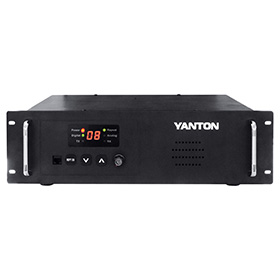
- A repeater receives a weak signal from a radio, amplifies it, and retransmits it at higher power, typically from an elevated location. This extends coverage beyond what direct radio-to-radio communication can achieve, overcoming obstacles such as buildings and terrain. In a DMR Tier II system, the repeater also manages the two TDMA time slots, allowing two simultaneous conversations through the same device. Repeaters can be linked over IP networks to create wide-area coverage across multiple sites without relying on cellular infrastructure.
What scenarios suit VHF and UHF bands respectively?
- VHF (typically 136–174 MHz) offers longer range in open outdoor environments with fewer obstacles, making it suitable for rural areas, agriculture, forestry, and wide-area outdoor operations. UHF (typically 400–470 MHz) penetrates buildings and dense structures more effectively, making it preferable for urban environments, indoor coverage, warehouses, and facilities with metal obstructions. For a single building or campus with structural barriers, UHF generally provides more reliable in-building coverage. For expansive outdoor sites where range matters more than penetration, VHF is often the better choice.
What advantages does DMR offer over analog?
- DMR provides several concrete benefits: doubled capacity (two talk slots per 12.5 kHz channel instead of one), better audio quality that remains clear until the coverage edge, longer battery life (up to 40% improvement in talk time due to TDMA's 50% transmit duty cycle), integrated data services (GPS, text messaging, over-the-air programming), and enhanced privacy through built-in encryption. DMR radios also support gradual migration—many models operate in both analog and digital modes, allowing phased replacement of legacy equipment.
What are the technical differences between DMR digital radios and analog radios?
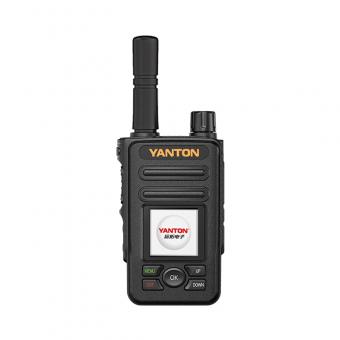
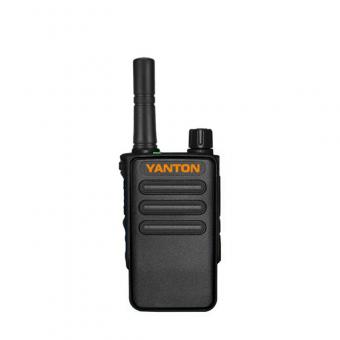
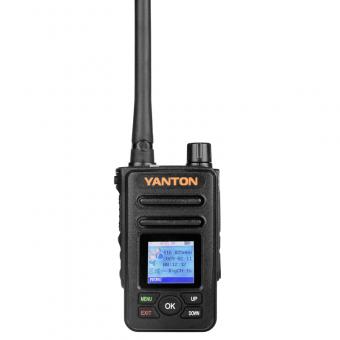
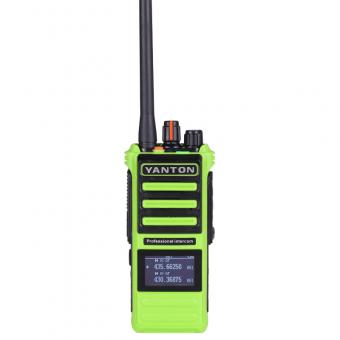
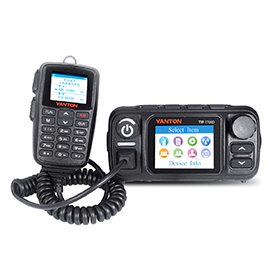
- The core difference is signal processing. Analog radios transmit voice as continuously varying electromagnetic waves; as signal strength weakens, background noise increases gradually. DMR radios digitize voice using a vocoder (AMBE+2), then transmit the data using 4FSK modulation. DMR employs two-slot TDMA within a 12.5 kHz channel, meaning a single frequency carries two independent voice channels by alternating in time. This digital processing allows error correction, which maintains intelligible audio until the signal drops below a threshold, rather than degrading gradually like analog. Like YANTON DM-369/DM-310 Radios.
How does a PoC (Push-to-Talk over Cellular) radio work, and why can it achieve wide-area communication?
- PoC radios do not rely on direct radio-to-radio links. Instead, they transmit voice over public cellular data networks (4G/5G) or Wi-Fi. When the user presses the PTT key, the terminal compresses and packetizes the voice, sends it through the carrier's base station to the internet, and a dispatch server forwards it to the target user or group. Wide-area communication is possible because PoC leverages existing telecom network coverage—wherever there is cellular signal, the radio works, eliminating the need to build private repeater infrastructure across sites. The trade-off is dependence on carrier networks, which may fail during major outages or be unavailable in remote areas.
What are the functions of remote monitoring, remote kill, and man-down alarm? Why are they important?
- These are advanced security and management features. Remote monitoring lets a dispatcher listen in discreetly. Remote kill disables a lost or stolen radio. Man-down alarm automatically triggers an emergency alert if the user falls or becomes motionless.
How do I estimate two-way radio battery life? How do I choose between standby time and talk time?
- Battery life depends on capacity (mAh), transmit power, usage ratio (standby vs. talk), and features like GPS. Standby time is how long the radio lasts when mostly idle; talk time is how long it lasts during active transmission.


 English
 русский
 español
 português
 العربية
 China






 YANTON Building,Creation Road Tuoxing Industrial,Optoelectronics-information industry base,xiamei town,Nan'an City, Fujian Province, China, 362302.
 86-592-5798082
86-595-86767398
 86-595-86761298