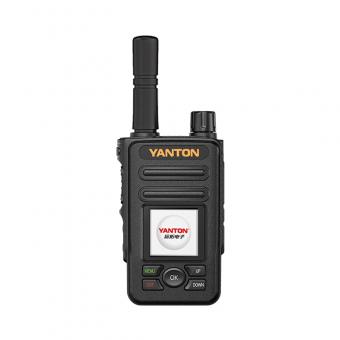
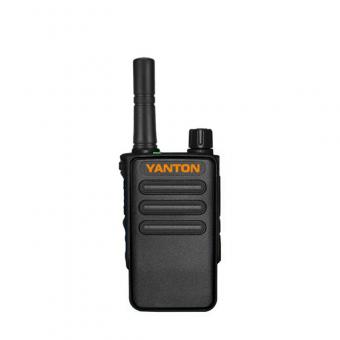
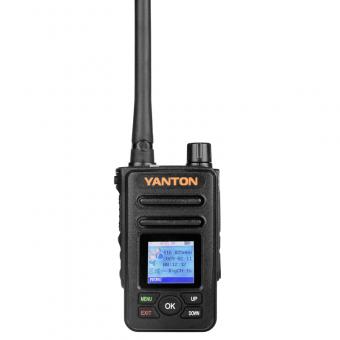
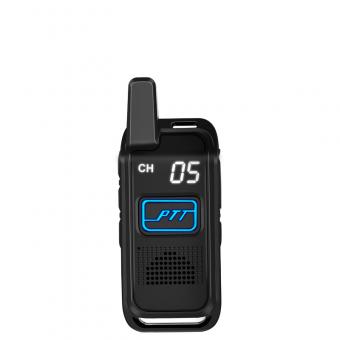
What is the actual communication distance of a two-way radio? What factors affect it?
- Actual range varies widely—from a few hundred meters indoors to several kilometers outdoors, and even farther with repeaters or mobile radios. Factors include power, antenna, frequency, terrain, obstacles, and interference.
What are the benefits of dual-mode (analog + digital) two-way radios?
- Dual-mode radios can operate in both analog and digital modes, allowing smooth migration from legacy analog systems to digital without replacing all existing devices at once.
VHF (136–174MHz) or UHF (400–480MHz)? How do I choose the frequency band?
- VHF generally performs better over long distances in open outdoor areas. UHF generally performs better indoors, in urban environments, and through obstacles. Choose based on your environment and usage.
What are GPS-enabled two-way radios used for? How do they enable personnel tracking and route playback?
- GPS-enabled radios allow real-time location tracking, dispatch management, and route playback. They are widely used in fleet management, security patrols, construction sites, and emergency response.
What does IP67 waterproof rating mean for a two-way radio?
- IP67 means the radio is dust-tight and can withstand temporary immersion in water (up to 1 meter for 30 minutes). It is a high level of protection suitable for outdoor, wet, or dusty environments.
What is the difference between 5W and 10W transmit power? Does higher power mean longer range?
- Higher power generally means a stronger signal and potentially longer range, but actual distance depends heavily on the environment. 5W is suitable for typical handheld use; 10W is often used for longer-range or more challenging conditions, but it also consumes more battery and may not always deliver proportional range gains.
What is the difference between PoC (Public Network), DMR Digital, and Analog two-way radios? How do I choose?
- PoC radios rely on 4G cellular networks, offering wide coverage and rich features. DMR digital radios are professional digital systems with clear audio, better security, and high spectrum efficiency. Analog radios are low-cost and compatible with legacy devices, but offer fewer features and weaker interference resistance. The right choice depends on coverage needs, use case, budget, and whether centralized management is required.
What radio system should fleet dispatch use? How do you implement GPS positioning and track monitoring?
- Fleet dispatch requires three things: voice communication, real-time location, and historical track playback. Traditional analog radios do none of these. PoC radios with GPS and a dispatch console solve all three in one system.


 English
 русский
 español
 português
 العربية
 China






 YANTON Building,Creation Road Tuoxing Industrial,Optoelectronics-information industry base,xiamei town,Nan'an City, Fujian Province, China, 362302.
 86-592-5798082
86-595-86767398
 86-595-86761298